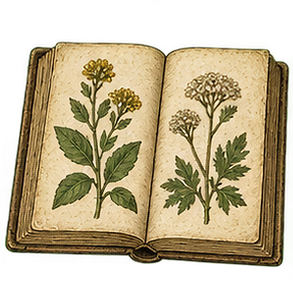
The Illustrated Herbal
The evolution of botanical manuscripts, illuminated codices, woodcuts, and printed botanical texts from antiquity to the Enlightenment.
Inside this collection

The Vienna Dioscorides
Codex Vindobonensis, early sixth-century Byzantine botanical illumination, naturalistic depictions, and imperial vellum production.

Pseudo-Apuleius Herbals
Anglo-Saxon and continental manuscript traditions, stylized symmetry, apotropaic plant illustrations, and scribal transmission.

Tractatus de Herbis
Southern Italian and Salernitan traditions of illuminated materia medica, Circa Instans texts, and practical studio pigments.

The Voynich Manuscript Flora
The enigmatic botanical folios of Beinecke MS 408, composite fictional leaf structures, and scholarly transcription attempts.

Brunfels & The German Fathers
Otto Brunfels' Herbarum Vivae Eicones, Hans Weiditz's unidealized realistic woodcuts, and the break from stylized medieval copywork.

Leonhart Fuchs' Woodcuts
De Historia Stirpium (1542), monumental full-page botanical cuts, and the groundbreaking artistic credits given to the printmakers.

Gerard's Herball & Plagiarism
John Gerard's 1597 Herball, pirate utilization of Tabernaemontanus's woodblocks, and translation debts to Rembert Dodoens.

Hortus Eystettensis
Basilius Besler's immense 1613 copperplate folios documenting the botanical wonders of Prince-Bishop von Gemmingen's Eichstätt garden.
A darker leaf.
A closer look.
We trace the line between botanical evidence, historical remedies and plant lore. A beautiful specimen deserves a careful reading.
Our approach